Garage planning · 3 min read
Gap under the garage door? Compare the bottom seal, floor and closing position
A torn strip beneath a garage door, a dip in the floor and a door that stops crooked need different assessments. Before buying a thicker bottom seal, identify where the gap appears and whether the door is closing normally. Replacing the rubber should follow that assessment, rather than stand in for a door or floor repair.
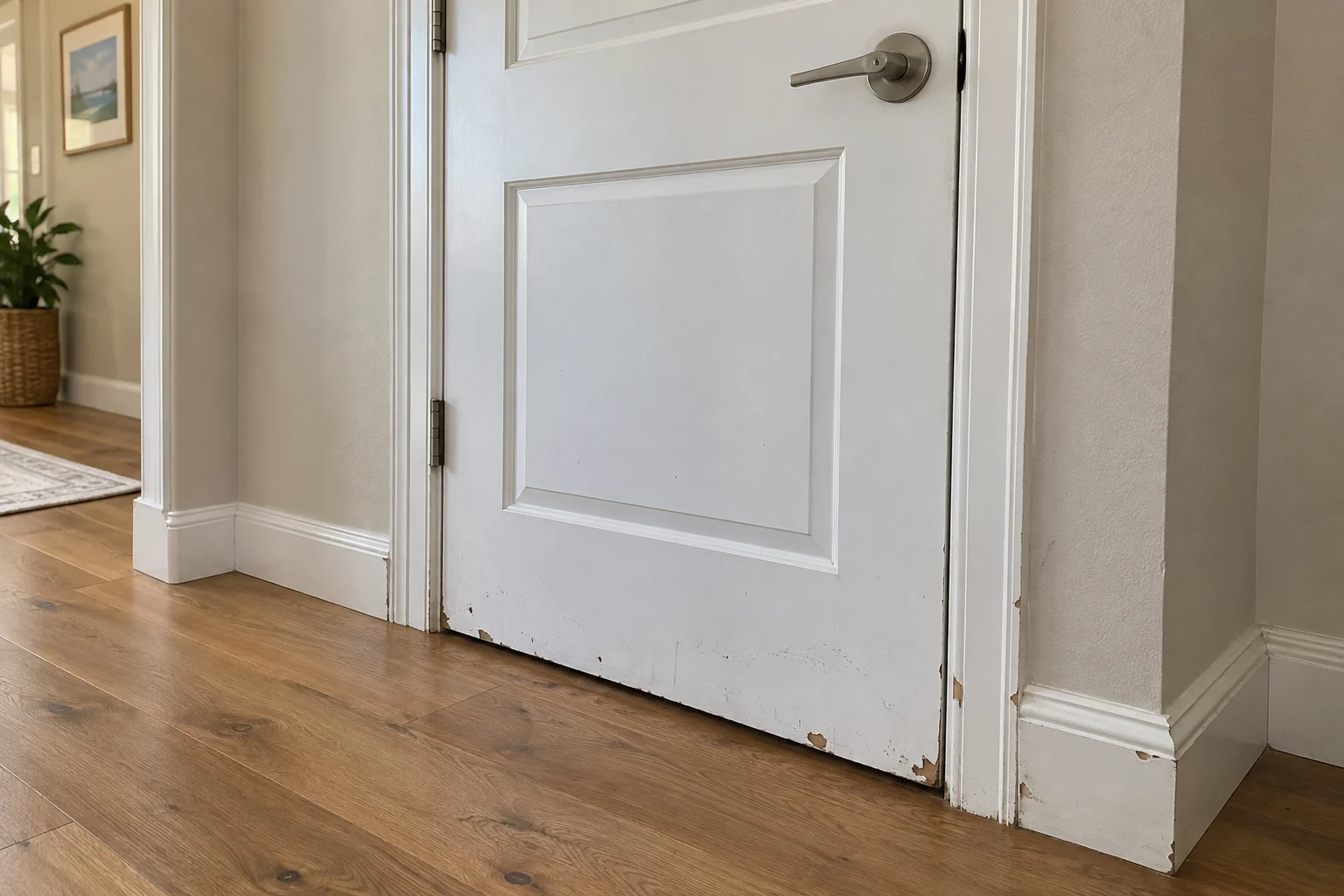
Record the gap and the water pattern
If the door is already closed normally, take a wide photo from a safe position showing the lower edge and floor. Note whether daylight appears along most of the opening, at one corner or beneath a low spot. Include visible cracking, tearing or a missing section of seal without reaching underneath the door.
For water entry, describe what you have observed during rain: where it first appears, whether it collects outside, and whether the sides of the opening are wet too. Do not recreate the problem with a hose. These observations help define the assessment without proving that one strip caused the leak.
Match the attachment, not just the door width
Action Industries' attachment guide distinguishes T-end, bead-end and P-bulb profiles, plus single- and double-channel retainers. It also explains that a rounded sealing bulb does not identify the attachment by itself. Similar-looking seals can have different attachment dimensions.
Have the installer confirm the profile, channel arrangement, attachment size and door width before ordering. Action cautions against using an old strip's length alone because seals can shrink or deform. Ask whether the existing retainer is reusable or needs a matched seal-and-retainer replacement.
Send the door brand and model from existing records, plus any safely visible part markings. Leave the seal installed for the initial review; an inaccessible end profile can be identified during the professional visit.
Compare a bottom seal with a floor threshold
Clopay distinguishes the flexible bottom seal attached to the door from a threshold attached to the garage floor. Its guide identifies uneven floors and a garage sitting below the driveway as situations where a threshold may help. That does not establish which product will suit your opening or guarantee that water will stay out.
Ask the assessor to review the floor contact across the full width, including any existing raised strip or sill. Compare seal-only work, a compatible threshold and any separate floor or drainage work. Before adding a raised strip, discuss vehicle passage, wheeled equipment and how water already inside the garage will leave.
Put closing problems ahead of seal selection
If the door has begun closing unevenly, reversing unexpectedly, binding or leaving a new large gap, arrange a garage-door specialist's assessment. Do not increase opener force, alter travel settings or pull the door down to compress a new seal. A larger strip is not a substitute for checking operation.
Clopay assigns springs, door sections, track and operator repairs to garage-door professionals and warns against removing bottom brackets while the door is under tension. Leave springs, cables, brackets and tracks untouched. Do not operate a visibly damaged or unstable door just to obtain photos.
Request a defined scope
Send Coast & Craft your city, door details, accessible photos and the observed gap or water pattern. Include any operating trouble and proposed seal product. Ask whether the accepted work covers the seal alone, its retainer, a floor threshold or a specialist assessment before arranging a visit.
Sources & product details
Manufacturer instructions for your exact product take precedence over general planning guidance.