Repair planning · 3 min read
Why is my double-pane window foggy, and which part needs attention?
A milky patch on a bedroom window can come from three places. Before asking for new glass, see whether you can wipe the moisture off the room side, whether it disappears as the morning warms up, or whether it appears to sit between the panes. Each observation leads to a different conversation.
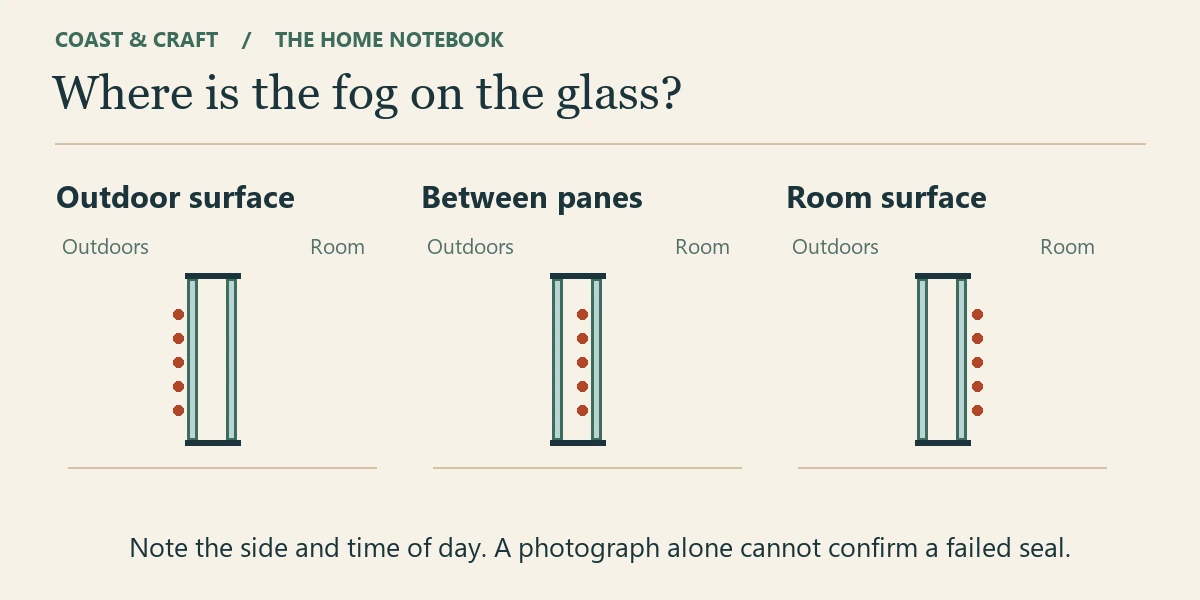
Locate the moisture while it’s visible
From inside the room, gently pass a clean, soft cloth over a small fogged patch on intact glass you can comfortably reach. A clear stripe through the droplets identifies moisture on that face. If the stripe stays hazy, the exterior surface and the space between panes are both still possibilities. Check an outside surface only from safe ground-level access. Leave upper-story glass to the specialist.
- Room side. Warm, humid indoor air can leave droplets on cool glass. If several windows fog after a shower or a pot boils, note whether the patches wipe away and whether using the room’s exhaust fan makes a difference the next time.
- Outside. Dew can form on cool glass overnight and evaporate after sunrise. Even one shaded window can stay cloudy longer than its neighbors. A second photo from the same spot later in the day shows that change without needing to reach the glass.
- Between panes. Recurring droplets or a cloudy patch apparently beyond both dry surfaces can indicate moisture entering the sealed glass unit. Ask for inspection if the location is uncertain. Leave the panes sealed.
Tell the glass shop exactly which section fogs
Take one photo of the whole window and one close view while the patch is visible. Include the time, which windows are affected and which surfaces you could check. For example, “The fixed upper section is cloudy at breakfast and still cloudy at noon. The lower section stays clear. I could only check the inside.” That last detail keeps the installer from assuming the exterior was dry.
Look for the original order, approximate installation date and any product label visible from the room. Ask the manufacturer whether the glass is under warranty, what evidence it needs and whether labor is covered. Report water staining the frame or trim after rain separately so the visit also addresses where that water enters.
Find out what the quote replaces
The insulated glass unit is the sealed set of panes. A sash is the framed section holding the glass. The distinction can change the order even within one window series. For the 100 Series single-hung windows in its catalog, Andersen specifies replacement glass for the stationary section and separately lists a made-to-order sash for the section that opens. Tell the supplier which section is foggy before comparing prices.
Ask which parts can be retained on your model. If the quote includes a sash, ask why the glass and sash need to come together. If it includes an entire window, ask what condition of the frame or which parts limitation calls for that work. For a Coast & Craft request, send your two photos, the window ID if available and your observations so the team can review whether a glass specialist should visit.
Sources & product details
Manufacturer instructions for your exact product take precedence over general planning guidance.